Finding hope in humanitarian response
16 September 2026
New Zealand Red Cross Secretary General Sarah Stuart-Black on why locally-led disaster response and Kiwi generosity offer hope amid global crises.
The news can make the world feel hopeless. I get to see another side of it.
It has been difficult lately to look at the news without feeling overwhelmed by the scale of human suffering around the world.
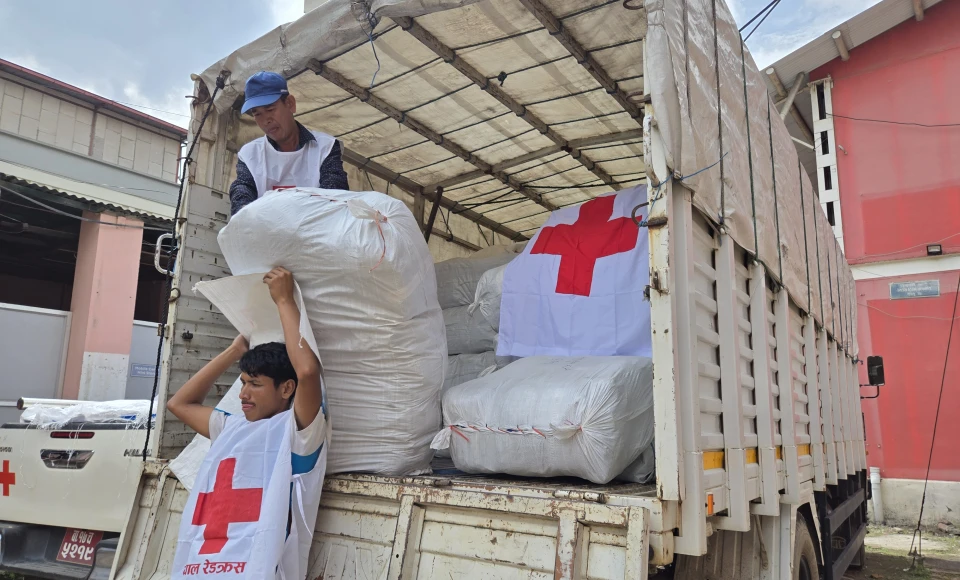
130 active armed conflicts now rage across the world. The humanitarian crisis in Gaza continues, as does the conflict in Ukraine, with millions of people still living with the consequences. In recent months, powerful earthquakes have devastated communities in Venezuela and Colombia, with hundreds of lives lost and tens of thousands of people affected. And just last week, devastating floods and landslides swept through Nepal, with lives lost, homes destroyed, entire communities cut off and nearly 100,000 people affected.
My role at New Zealand Red Cross means I see another side of these emergencies. I see the initial reports coming through. I see what our Red Cross and Red Crescent colleagues are doing locally on the ground. And I see the support that comes from people here in Aotearoa New Zealand.
I would obviously rather there was no need for any of it. But seeing what happens after disaster strikes gives me hope.
When the floods hit Nepal, Nepal Red Cross didn't arrive after the event. It was already there. It is one of the country's largest humanitarian organisations, with experienced employees and volunteers who know their communities and have spent years preparing for and responding to disasters.
There are 191 National Red Cross and Red Crescent Societies around the world – one national society in each of those 191 countries. They are part of the very communities they serve, there before a crisis begins and long after international attention has moved elsewhere. There is growing evidence of just how important that is.
Research published by the International Federation of Red Cross and Red Crescent Societies last month shows that investing in local organisations before disaster strikes strengthens their ability to lead the response when their communities need them.
It seems obvious. The people who know the roads, the health system, the language, the risks and the communities should be at the centre of the response. So, when disaster does strike, resources need to reach those local organisations so they can act.
But globally, only 1.2% of international humanitarian assistance goes directly to local and national responders.
The humanitarian sector calls this localisation. The principle is simple, it is about local people being able to lead the response in their own communities, backed by a global network when they need it – and they do need that backing.
Having experienced people on the ground does not mean there is enough money to meet the need. There isn't. Humanitarian funding fell sharply last year, even as needs remained enormous.
This is why I continue to be struck by the response we see here in New Zealand. Since the floods in Nepal, New Zealanders have donated to support communities thousands of kilometres away, to support people they will probably never meet.
When the scale of suffering around the world can feel overwhelming, there is something hopeful in that. People here are still choosing to help. It is a reminder that what happens on the other side of the world is not as distant from us as it can sometimes seem.
We can't know exactly where the next disaster will be or how severe it will become. What we do know is that communities will need strong local organisations that are prepared and ready to respond and those organisations will need resources behind them.
From where I sit, I get to see both: local people there when their communities need them, and people here in New Zealand choosing to support them. That support makes a difference.
What I see gives me hope.