Updates and resources
It can be hard to keep up to date with everything that is going on. This page has information about all our communication channels.
Keeping up to date
This website is the best place to keep up to date. You can:
- See our current appeals
- Find out where volunteers are needed right now
- Access tools and guidance for volunteers, including health, safety and wellbeing support
- Learn about induction and training opportunities
- Find details about our area councils, branches and groups
- See our fundraising events calendar
- Share our stories with your friends and whānau
We communicate regularly to all our members and volunteers via email. When you join as a member, we add you to our mailing list.
New Zealand Red Cross National Council AGM 2026 livestream
We will be welcoming our National Council members from across the motu to Wellington for our Annual General Meeting this Saturday.
All Red Cross people have the opportunity to view the Annual General Meeting through our event livestream. The livestream has been set up to ensure everyone interested in the governance and direction of our organisation has the opportunity to observe.
The event will be live from 8.15am - 12.30pm on Saturday, 7 November. To join the livestream, follow the prompts provided via the link.
If you have any questions about the AGM livestream, please email OOSG@redcross.org.nz
R2030 Review Stage 1 (Sustainability) is now complete
Stage 1 of the R2030 Review is now complete. This stage of the review involved a significant amount of work to better understand our financial situation and our sustainability in a challenging and uncertain environment. It has confirmed that New Zealand Red Cross faces increasing financial challenges, with rising costs and pressure on our income. Some immediate savings have been agreed, while other options need further consideration.
At the heart of this work is making sure New Zealand Red Cross can continue supporting people and communities who need us, now and into the future. We need to make changes to protect our financial sustainability and our ability to deliver humanitarian services. We will keep Red Cross people informed as this work progresses.
Our financial situation
Our operating environment has changed significantly since Strategy 2030 was developed. As IFRC Secretary General Jagan Chapagain has said, humanitarian needs are growing, while funding and support are becoming increasingly stretched.
Global uncertainty has contributed to rising costs of living, fuel and commodity prices and an overall slower economy with constrained spending, which means there is less funding available, fewer donations and people have less money to spend on goods and services, including ours.
As a result, our operating costs are continuing to increase sharply, and our revenue (or income) is also being affected as people reduce their spending and donations.
We are not alone in facing this challenge.
- Other ‘For Purpose’ organisations across New Zealand tell us that they are experiencing similar financial challenges. Some of these organisations are being forced to make very difficult decisions like stopping services and reducing their impact to ensure their future financial sustainability.
- Other National Societies in the Red Cross and Red Crescent Movement are also grappling with financial sustainability as one of their most pressing and urgent challenges.
We know we cannot continue operating this way indefinitely. If we continue to work as we have been, then we will have increasing financial pressures, including on how our cashflow can operate and whether we are able to move out of deficit. This means we will not achieve our goal of reaching financial sustainability by 2030.
This is about more than our finances. If we don't address these challenges, we risk compromising our ability to deliver the services and humanitarian support for people in need across Aotearoa New Zealand and around the world.
What did Stage 1 involve?
Stage 1 of the review involved building our understanding of financial challenges and what is required to achieve financial sustainability so that we can deliver on the intent of Strategy 2030.
The analysis in Stage 1 drew from previous work on the original Financial Sustainability Programme and savings opportunities already identified by the Executive Leadership Team in May this year.
This stage of the review drew on financial expertise from consultants MartinJenkins to support this work and to provide an objective external view.
- We considered the external economic pressures on our organisation and forecast the future impact of those factors.
- The analysis showed that we have a stark financial sustainability challenge that is intensifying. This is largely driven by our external operating environment.
- Our National Society has recorded annual deficits regularly in recent years. In the increasingly challenging operating environment, if we don’t change our approach, then those deficits are forecast to deepen and continue.
- Then we assessed what we would need to save to meet that goal of achieving financial sustainability by 2030.
- Analysis showed that we would need to find ongoing annual savings of at least $3.1 million (5% of our total budget) or generate the equivalent additional income to meet that goal by 2030 and until then manage mindfully what we invest in. This will allow us to manage further external pressures that may arise before 2030.
What next?
In light of this analysis, our Executive Leadership Team agreed that we would need to find some immediate savings to ensure we have sufficient cashflow in coming years.
They also agreed to longer-term work to identify savings opportunities that require more detailed analysis because of potential impacts, risks, and difficult choices involved.
All of these initiatives will be progressed and implemented through a new Financial Sustainability Programme (FSP2). This programme will develop in coming months and will be considered by the National Board during their meeting in March 2027.
Regardless of this review, as a charity we have a responsibility to use our resources carefully and make the most of every dollar. Looking for ways to reduce costs and work more efficiently is part of running a responsible organisation and this is particularly important given the financial pressures we are facing.
Some of the FSP2 initiatives will be implemented this financial year so that we reduce costs savings and protect our cash reserves as soon as possible. For example:
- The restructure of our Executive Leadership Team, which has created annual savings of over $300,000, has already been implemented.
- There will be some ways to reduce our day-to-day operating costs like switching to less expensive providers where we can, and reducing or cutting non-essential spending, like non-essential travel or professional development.
- We will be removing some vehicles that are not essential for delivering impact in communities.
- Some examples of the more complex initiatives requiring further work include:
- Considering different channel mixes for First Aid so we can realise a greater reach and engage more potential customers. A review of our Migration contracts for Pathways to Settlement and Refugee Trauma Recovery ahead of the contract tender processes.
- A range of potential technology savings options (e.g. considering licensing and our technology replacement cycle).
- Ensuring we have the right properties and fleet to deliver impact in communities sustainably. Currently some of our properties and vehicles are under-used and costing money to maintain. We will need to reduce our properties and fleet so that the savings can be used to increase our impact in communities. Part of this work will also involve reconsidering how New Zealand Red Cross is physically represented in communities.
Our Executive Leadership Team also decided not to go ahead with some possible savings initiatives. These decisions were made for a range of reasons, such as the level of disruption involved, or an unacceptable level of risk.
We want New Zealand Red Cross to continue making a difference in communities for generations to come. To do that, we need to make some changes to how we work and deliver our services, while staying focused on the people who rely on us.
We will be planning the timing of this work very carefully to ensure we don’t make hasty decisions or create unnecessary disruption.
We recognise that hearing about potential changes can create uncertainty, particularly when the details are still being worked through.
We are committed to keeping people informed, being clear about what has and hasn't been decided, and involving those affected as the work progresses.
R2030 Review Stage 2 (Governance structures and support) is now underway
Work on Stage 2 of the Realising 2030 Review (governance structures and support) is now underway.
This work draws on all of the extensive analysis and consultation that was undertaken as part of the Area Model Review earlier in 2025 and 2026. It will also progress some of the more substantive governance-related recommendations from the Area Model Review.
Some Red Cross people will be invited to contribute at this early stage because of their governance positions, and the experience and insights they can bring to this early work.
Between October and January, a range of potential governance options will be developed for the National Board to consider at their March 2027 meeting. These options will range from very significant changes to our governance structure through to minor tweaks and improvements. The board will decide which governance options, if any, to progress through to a statutes review of our Constitution and Regulations.
All New Zealand Red Cross people will be consulted and invited to have a say on any governance changes that are proposed as part of that statutes review process through 2027.
Any changes to our statutes would need to be approved by our National Council in November 2027.
Annual updates to our Regulations
Every year we update our Regulations to make them more consistent, remove any ambiguities and reflect current operational requirements.
New Zealand Red Cross Regulations
This year there were some minor updates that don’t change the meaning of our Regulations or way we operate. These minor changes are approved by the National President.
List of minor changes to Regulations
The National Board also approved some more significant changes that will change the way we work in some ways. These are listed below.
|
Updated section |
Who is affected |
What has changed |
|
2.14.12 Appealing a decision |
Membership & Volunteering team |
The National President can now establish an appeals subcommittee without reference to the full National Board. Where a member has been expelled, they now have 90 days in which to lodge an appeal. |
|
5.7.1 Composition of a Branch Committee |
Membership & Volunteering team, Coordination and Planning team, Branches, Area Councils |
Once a person has served six years as a Branch Official, regardless of whether that service was in one role or across multiple roles, they must stand down from all Branch Official positions for one term (three years) before being eligible to serve again. There is now a requirement for Area Councils to actively support Branches to find replacement Officials. |
|
5.9 Annual General Meeting (Branches)
|
Membership & Volunteering team, Coordination and Planning team, Finance team, Branches, Area Councils |
Branches must have their annual financial reports made available for consideration and approval at their AGMs. |
|
6.12 Annual Area Planning and reporting |
Coordination and Planning team, Local Group, Branches, Area Councils, Board Liaisons |
Where an Area Council, Branch or Local Group is not engaging in a timely way with the Area Planning process, the Board Liaison or National Board nominee may make decisions to ensure that Area Planning and Reporting processes are able to be conducted in a timely manner. |
|
6.15 Annual General Meeting of Area Council |
Area Councils |
There is no longer a requirement to hold a separate Area Forum in March. Instead, the Area Forum will be combined with the Annual General Meeting of the Area Council, creating a single annual event that brings members together and invites all Red Cross people in the Area. |
|
10.4.4 Terms of Office (Area Council elections) |
Membership & Volunteering team, Coordination and Planning team, Area Councils |
Area Councils cannot co-opt members to the Area Council between 1 March and 30 June, as it is the election period for the following year's Area Council. |
|
10.5 Elections for Branches
|
Membership & Volunteering team, Coordination and Planning team, Branches, Area Councils |
We have added better guidance on what is required for Branch elections. |
|
12.1 Bank accounts |
Local Groups, Area Councils |
A Local Group’s funds are to be administered by an Area Council only. The previous option for a Branch to administer Local Group funds has been removed. |
|
12.7 Management of funds through the New Zealand Red Cross Foundation |
Local Groups, Branches, Area Councils |
Quarterly interest payments on funds held with the Foundation may be withheld if financial requirements or organisation policies are not being met. |
|
12.8 Bank Account Holding Limits |
Local Groups, Branches, Area Councils |
Legacy interest funds cannot be reinvested back into the Foundation. This removes ambiguity in the Regulations and ensures surplus funds are used to maximise community impact by supporting nationally coordinated New Zealand Red Cross programmes and activities.
|
|
12.15.2 Forming partnerships |
Coordination & Planning team, Local Groups, Branches, Area Councils |
All existing and proposed local partnerships need to be managed in accordance with the Community Partnerships Policy. Familiarise themselves with the Community Partnerships Policy and if and when this policy is updated. |
If you have any questions about the Regulations, please email OOSG@redcross.org.nz
Tā Mātou Mahere / Our Plan and Budget for 2026/27
Tā Mātou Mahere / Our plan for 2026/27 (Our Plan) provides a high-level overview of our priorities and activities for the year ahead, backed by an aligned budget. Guided by Strategy 2030 and organised around the impacts we aim for, Our Plan shows how we will work together to make a difference in 2026/27.
This year’s Plan and Budget reflect our ongoing Realising 2030 programme, as well as the challenging environment we're working in. Global uncertainty, rising costs, pressure on government funding and ongoing cost-of-living pressures mean people and organisations have less to give and spend. As a result, we’ve seen donations, and demand for First Aid training decline.
Our commitment to delivering impact in communities while strengthening our long-term sustainability remains unchanged. To do this, we have had to tightly prioritise activities that make the greatest impact now and into the future. We’ve also had to make some tough decisions about where to focus our time and how to make the best use of our resources and budget.
This means we have had to slow down and reduce some aspects of our work. We don’t always deliver everything in our ambitious workplans. Spreading work over a longer period helps ensure it is achievable and sustainable for those undertaking the work.
We are also reducing some activities such as travel and training budgets. In the past we have not always achieved everything we planned and budgeted to do on travel and training. Looking ahead, we will keep being realistic about what we include in our plans and budgets to ensure they are sustainable and affordable. A part of this will be the continuing review of our assets such as properties and vehicles. Where these are underutilised, we’ll consider whether we can divest out of properties and/or bring our people together in fewer buildings in some locations and look to reduce the number of vehicles we have to save costs and find efficiencies.
For 2026/27 Our Plan prioritises the work that will continue to strengthen our resilience and long-term sustainability, supports our impact in communities, and is achievable within our available resources.
For 2026/27, our key areas of focus include:
- financial sustainability
- Te Ara, the Digital Transformation Programme
- the review of Realising 2030 and the Area Model
- He Pito Mata – our programme to lift Te Ao Māori capability, and
- the Emergency Competency Framework.
Developing Our Plan and Budget takes a collective effort across our organisation. Thank you to everyone who contributed their time and expertise to help shape our work for the year ahead.
End of year actions calendar for branches and area councils (FY 2025/26)
To support great local delivery, our area councils and branches have important end‑of‑year planning, reporting, governance, and financial actions to action related to the end of the 2025/26 financial year.
If you have any questions or need support, please contact your Area Support Team either directly or via membership@redcross.org.nz.
|
Date |
Area councils |
Branches |
|
31 May |
|
|
|
15 June |
|
|
|
30 June |
|
|
|
7 July |
|
|
|
15 July |
|
|
|
31 July |
|
|
Changes to our executive leadership structure and roles
New Zealand Red Cross is making some changes to its Executive Leadership Team (ELT) to bring together related work, strengthen collaboration across teams, and ensure we continue to make the best use of our resources.
Two ELT vacancies arose following Sue Price's retirement as General Manager Migration late last year, and Jane Derbyshire's departure as General Manager Organisational Services in May this year. Isaia Piho, Sean Stewart and Fiona Ross have provided interim leadership across these areas in the meantime.
This has given us the opportunity to review how leadership responsibilities are organised across New Zealand Red Cross. As a result of this review, from Monday 3 August, we will move from seven to five ELT roles.
The changes include:
- Fiona Ross moves from her current role of General Manager People Experience and Support into a new role of General Manager People and Enabling Services.
- Sean Stewart moves from his current role of General Manager Emergency Management and International into a new role of General Manager Operations.
- Isaia Piho retains his Pou Ārahi role and takes executive oversight of the Digital Transformation Programme.
Shane Chisholm remains General Manager Engagement and Enterprise, and Alexandra (Alex) Pierard will remain Executive Director of the Office of the Secretary General.
There will also be some changes to reporting lines within the Operations Group, including migration services. These changes do not affect the services we deliver to communities.
These changes will help teams work more closely together, strengthen support across the organisation, and improve resource management—particularly important given the financial pressures facing the for-purpose sector.
Executive Leadership Team.pdf (400kb)
Structure of the Operations Group.pdf (98kb)
Structure of the People and Enabling Services Group.pdf (94kb)
Honouring the life and contributions of Sir Kenneth Keith
New Zealand Red Cross is deeply saddened by the passing of The Right Honourable Justice Sir Kenneth Keith ONZ KBE KC.
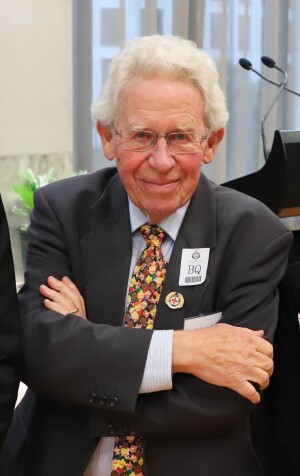
Sir Kenneth was one of New Zealand’s most respected authorities on international law and international humanitarian law, and a longstanding and deeply valued contributor to New Zealand Red Cross.
As inaugural Chair of the New Zealand International Humanitarian Law Committee, Sir Kenneth helped shape understanding of international humanitarian law in Aotearoa New Zealand for more than four decades. He was also a passionate supporter of the New Zealand Red Cross International Humanitarian Law Moot competition, mentoring and inspiring generations of law students and emerging legal professionals.
Sir Kenneth’s contribution to humanitarian law, public service, legal education and international justice was immense, and his wisdom and generosity left a lasting impact on many across the humanitarian and legal communities.
Our thoughts are with Jocelyn, Lady Keith, their whānau and all those mourning his passing.
Moe mai rā e te rangatira, e moe.
Fundraising
Fundraising toolkits and templates
See our range of resources available for planning your next fundraising event:
Planning your fundraising event
Red Cross members, volunteers and employees can also access a branch fundraising toolkit:
Branch fundraising toolkit (PDF, 17MB)
Disaster and emergency support
New Zealand Disaster Fund
See a full breakdown of how the Fund was spent and its impact, read stories on the Cyclone Gabrielle response and recovery, and find information on mental health training and caring for yourself and others during an emergency.
Visit our New Zealand Disaster Fund hub
Good and Ready Essentials – a step-by-step guide to preparedness
Disasters and emergencies can strike Aotearoa New Zealand at any time, without warning. It is important for us, as members of the New Zealand Red Cross, to be well prepared. When we are prepared we can continue to assist those in need during an emergency or disaster, and helps us and our households to cope.
Visit the New Zealand Red Cross Good and Ready webpage:
Prepare for a disaster – get Good and Ready
We encourage you to complete all the steps on the page so that we all have a plan and know what to do when an emergency or disaster strikes. Good and Ready connects to NEMA disaster preparedness resources, which are available in a variety of languages.
We’ve switched off the Hazard App
From 2015, the Hazard App was available publicly to support communities before, during and after disasters. The app was able to issue hazard alerts.
Since then, there have been many changes in New Zealand’s approach to hazard alerting and there are now a range of ways people can stay informed during emergencies.
Health, safety, and wellbeing
Get involved
If you want to contribute to building a positive culture around health, safety, and wellbeing at Red Cross, then we need you!
Everyone has a role to play in making sure Red Cross is a healthy and safe place to work and participate in volunteering activities.
Expressions of interest are available for those who want to get involved and support health, safety, and wellbeing in your volunteering activity group.
Visit our health, safety and wellbeing webpage for more
Our EAP provider - TELUS Health
We changed to a new Employee Assistance Programme (EAP) provider TELUS Health on 1 November 2023 to provide a more comprehensive range of mental health and wellbeing resources to our people. For further details and how to access this support, or to find out what to do if you are currently accessing EAP through the previous provider, please visit the volunteers page on our website.
Health, safety and wellbeing resources
Guidelines on returning to work or volunteering after injury or illness
Rehabilitation and return to work or volunteering activities guidelines Oct 2023 (PDF file, 249KB)
What's new in our Regulations
Between March and November 2024, we reviewed the Members’ Handbook and created our new Regulations document. We've put together an outline of what we heard during consultation rounds and how our Regulations have changed to reflect your feedback.
What's new in our Regulations (PDF, 137KB)
Realising 2030
Realising 2030 is our plan to deliver the changes that will make Strategy 2030 possible. One of the first visible changes is the establishment of a new area model on 1 July 2023.
Find out details of the new areas
Regular publications
Inside RED is distributed monthly by email and is for members, volunteers and staff. We email a copy to members and volunteers. If you haven't been receiving 'Inside RED' you can sign up.
Social media channels
To make the most of keeping up-to-date with everything going on in Red Cross around Aotearoa, follow us on our social media channels – links are at the bottom of this page in the footer.
If you're sharing our content on social media you need to be familiar with our media and social media policies.
Intranet
Branch presidents, area council chairs, and their deputies can log in to the Intranet to access updates for office holders, file committee meeting minutes, and access online dashboards that show the latest membership data.
Latest stories for and about our people
25 August 2025
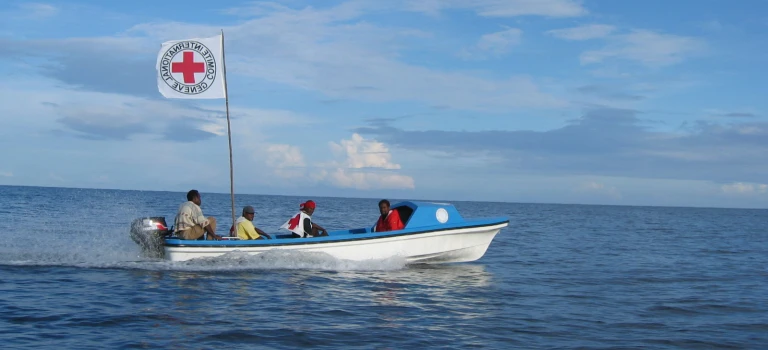
Wherever the need is greatest – 65 years of our International Delegate Programme
Read more
18 August 2025
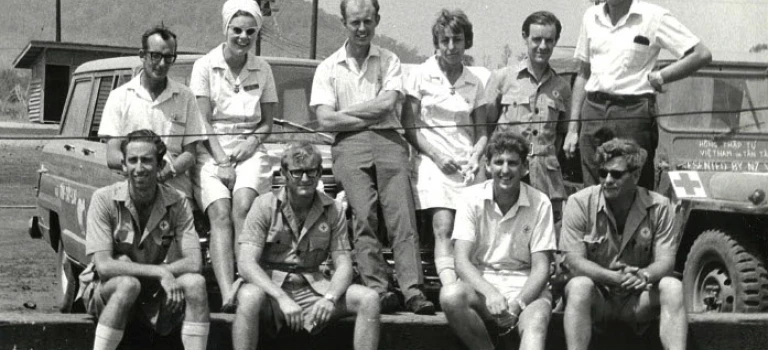
Service, sacrifice, and loss – Red Cross in Viet Nam
Read more
14 August 2025
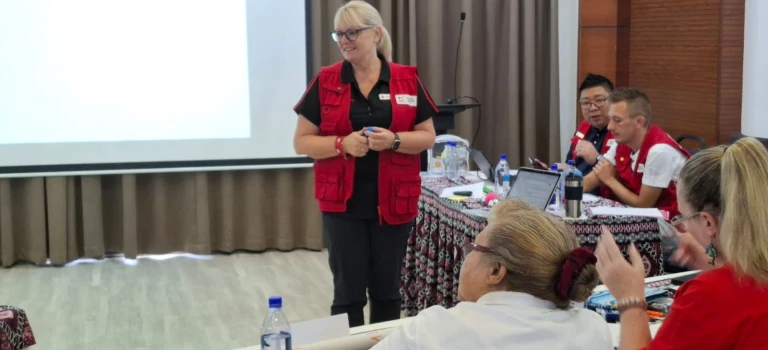
‘We came as individuals, we left as a family’ – building first aid capability across the Pacific
Read more
Disaster and emergency support
Myanmar Earthquake Appeal
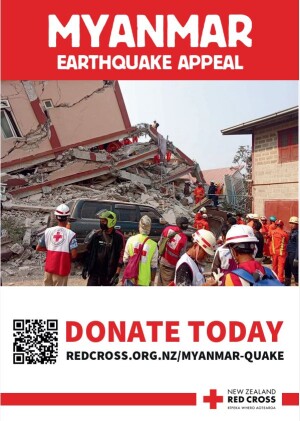 We’ve launched an appeal to support those affected by the devastating earthquake in Myanmar.
Donations raised will support the efforts of Red Cross Red Crescent teams through the response and recovery, helping to provide urgent relief such as temporary shelter and emergency supplies.
The damage to people’s lives and livelihoods from the 7.7 magnitude earthquake on Friday 28 March, and subsequent aftershocks, is immense. The quakes caused widespread damage, loss of life, and left many injured, and in need of food, shelter and medical assistance.
The situation is still developing, and humanitarian aid is urgently needed. Our thoughts are with all the people affected by this devastating earthquake.
Key links
- Donate via our appeal webpage: Myanmar Earthquakes Appeal
- Share this appeal webpage link: redcross.org.nz/myanmar-quake
- Create your own fundraiser: Red Cross Raisely webpage
Key resources
- Email banner/header (PNG, 730KB)
- Email signature (PNG, KMB)
(open and right-click to 'save image' and then add to your email)