
Former refugee plea: see our strengths not our struggles
19 June 2026
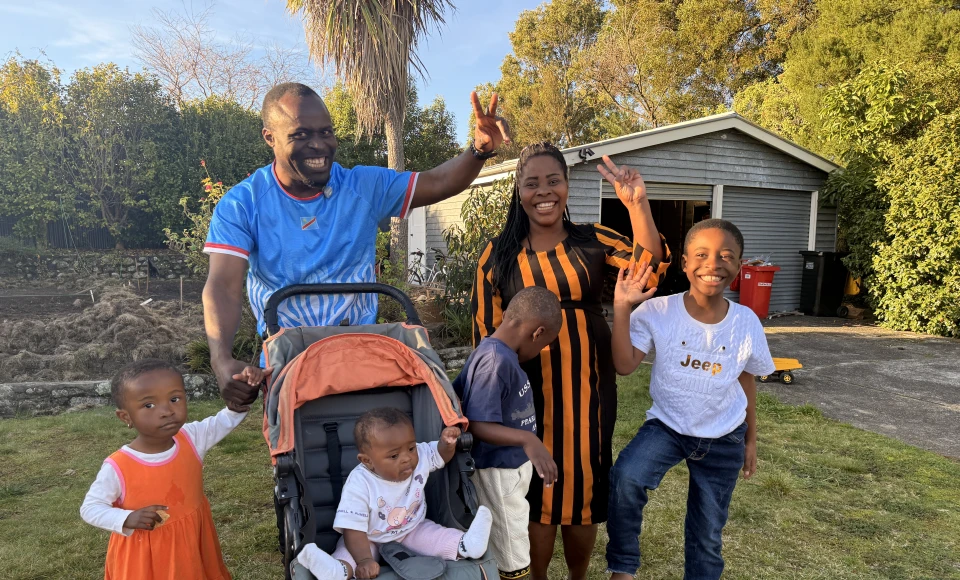
When the Democratic Republic of the Congo’s football team runs onto the pitch at this year’s FIFA World Cup, it will be for the first time in 52 years. It’s not a moment that Elie Balyamhamwabo Zagabe plans to miss. “As a Congolese, I’m getting prepared,” he says. Except he will be cheering on the Leopards half a world away from his new home in Masterton, which he shares with his wife and four children.
“You never forget your identity,” he says proudly touching the patch on his Leopards’ football jersey above his heart.
“Even when life takes you where you never expected.”
Elie left the Democratic Republic of the Congo when he was 29. Conflict and violence left the family little choice.
“We had to flee,” he says simply without bitterness.
He made his way to a refugee camp in Malawi where he spent the next 12 years.
“Life in the refugee camp was not easy,” he says. “Families struggled to find food, medicine, school materials and basic necessities.”
During the rainy season, the mud-brick houses leaked so badly that Elie and wife, Irene, would move from room to room through the night, trying to find somewhere dry in the house to shelter their small baby.
Acting on need
However, Elie is not one to sit and wait for something to happen. Seeing the hardships faced in the camp, especially by single mothers, he set up a community-based organisation called Family Health Promotion.
His first project in the camp was rabbit farming. He started with just five rabbits, and when they produced young, he distributed the offspring to vulnerable women. The agreement was simple: when your rabbit has babies, bring one back so we can pass it on to someone else. From that small beginning, a cycle of support started to grow.
He also saw women in the camp needed better nutrition but had no land. So, he came up with an idea: fill empty sacks with soil, stack them where there was space, including the roofs of huts, and grow vegetables in them. Women could eat food they'd grown themselves, right where they lived.
Welcome news for a new future
Finally, news came that he and his young family had been accepted to come to Aotearoa New Zealand. The challenges of moving to New Zealand were real: a completely new environment, a new language, new food, and a new system to navigate. But he says he stayed positive, kept learning, and leaned on the support they found all around them. “A neighbour named Steve brought bikes for the children. Our GP drove out to visit us twice, bringing clothes donated by the local community,” he says.
Parenting a child living with autism
One of the most meaningful changes has been for his son Bertin, who is five and lives with autism. “In Malawi, there were no facilities to support him,” says Elie. In New Zealand, he has an aide, and school support for his needs. "We are happy for that," he says.
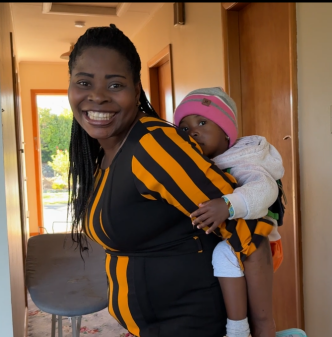
Irene Zagabe with Benita (2)
Looking ahead, Elie wants stability, opportunities for further study, and a chance to contribute to his new community. For his children, Primo (8), Bertin (5), Benita (2) and Nadine (6 months) who have only ever known life in a refugee camp, he hopes for peace, and good health.
His plea for New Zealanders is simple.
“For the people who will hear my stories, I hope they will not continue to see refugees’ struggles, but they will start seeing refugees through their strengths, through their humanity, through the values that they have and what they are able to do for the community,” he says.
Elie is, above all, looking forward. “I'm very happy to be here in New Zealand, and I'm now ready to begin another chapter of my life.”
More Information
Learn more about our work with refugees
You can find out more about Elie’s work in Malawi on the website
Lead photo: Former refugees, Elie Balyamhamwabo Zagabe his wife Irene and their children - Primo (8), Bertin (5), Benita (2) and Nadine (6 months) now live in Masterton.