
Kaikōura earthquake: remembering the people and the response, 10 years on
13 November 2026
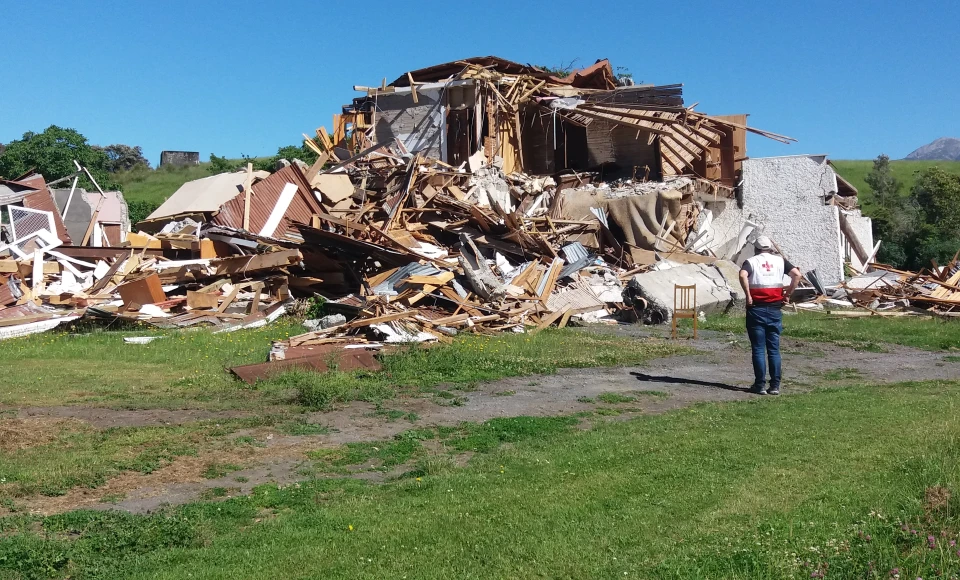
On 14 November 2016, a magnitude 7.8 earthquake struck Kaikōura and surrounding areas of the upper South Island, with significant impacts also felt in Wellington. Ten years later, we remember the people and communities affected and everyone who stepped in to help.
It was just after midnight when the earthquake struck. The shaking triggered landslides, damaged roads and buildings, and cut off key transport links. Kaikōura was among the hardest-hit areas, alongside communities including Waiau, Cheviot, Seddon and Blenheim. Wellington also experienced significant damage, with buildings evacuated and parts of the central city closed.
Two people lost their lives and dozens were injured. Thousands more were affected, with homes and livelihoods damaged, communities isolated and essential services disrupted.
For many people, giving to the Kaikōura Earthquake Appeal was a way to help. Together, you raised $3.5 million. Thank you for helping us get supplies to people in the first days and support communities through the long recovery that followed.
New Zealand Red Cross responds
As news of the earthquake and its impact emerged, New Zealand Red Cross moved quickly to mobilise volunteers and resources.
Carol Ball, our Area Coordinator and Planning Lead for Canterbury, remembers the earthquake.
“As the reports started coming in, we knew people were in trouble. Roads were blocked, communities were cut off and hundreds of people were stranded in Kaikōura. We needed to find a way to get our volunteers in and start supporting people.”
At around 3pm on 14 November, four of our New Zealand Red Cross Disaster Welfare and Support Team (DWST) volunteers reached Kaikōura in a small fixed-wing plane. With road and rail access blocked by landslides, flying was one of the few ways to reach the town.
The situation was made more complex by Kaikōura's popularity as a tourist destination. At least 1,000 tourists, along with hundreds of residents, were stranded. Many visitors had never experienced an earthquake before, and aftershocks continued to shake the town.
DWST team lead Doug Winter was one of the first to arrive.
Volunteers went door to door to check on people's wellbeing, distributed food, water and other essential supplies, and helped run community welfare centres.
“Our main role was to provide psychosocial support to the hundreds of people in distress,” Doug recalls.
As the response grew, more than 140 people from our team were involved in supporting affected communities across Marlborough and Canterbury.
In Kaikōura, we supported more than 570 people with information and support in the first fortnight.
Red Cross also deployed emergency equipment, including water bladders and tap stands, generators, satellite communications equipment and an inflatable welfare shelter. A Disaster Welfare and Support truck capable of providing shelter and food for up to 150 people was also deployed.
Red Cross worked closely with local organisations, including Te Rūnanga o Kaikōura and Takahanga Marae, where volunteers were based during the first five days of the response.
“Our volunteers were meeting people who were frightened, exhausted and unsure what would happen next. Some had lost access to their homes, others were stranded far from home. Sometimes the most important thing we could do was listen, offer reassurance and help people get the information and support they needed.”
Supporting communities through recovery
The earthquake's impact continued long after the immediate emergency.
A year later, some people were still living in damaged homes, caravans and temporary accommodation. Road closures kept families apart, and people were still dealing with financial pressures and the emotional effects of the earthquake.
Thanks to the generosity of those who gave to the appeal, New Zealand Red Cross remained alongside affected communities, providing practical assistance and helping people recover.
By March 2017, Red Cross had visited 2,987 households across Hurunui, Marlborough and Kaikōura, identifying people who needed additional support.
This included $1,000 Damaged Home Grants for people whose homes had been red- or yellow-stickered, or who had been forced to evacuate for seven days or longer.
Red Cross also helped families struggling with heating costs, supported improvements to cold and damaged homes, and distributed around 500 winter care packs containing warm clothing, blankets and other essentials.
Recovery was about more than repairing homes and infrastructure. It was also about helping people reconnect and feel safe again.
In Marlborough, Red Cross delivered its Kiri and the Emergency programme in schools to help children understand emergencies and manage anxiety.
In Kaikōura, Red Cross supported community initiatives such as The Crafty Place, where people could meet, take part in activities and support one another and Wacky Wednesday which was aimed to give kids alternative activities and their parents some time for themselves
Red Cross also worked alongside local Māori Wardens, building on relationships established during the initial response, and helped communities establish shared emergency supplies to improve preparedness for future disasters.
“One of the biggest challenges was that people's needs were so different. Some were cut off from essential supplies, others had damaged homes or were struggling with the emotional impact of the earthquake. We needed to listen to communities, understand what they were going through and make sure our support reflected what they actually needed.
"The more remote the community, the greater the challenge on being able to visit and support, some had to move into Kaikoura so they could go to work leaving their family on the farm for days and weeks at a time.
The response in Wellington
The earthquake also caused significant disruption in Wellington, where buildings were damaged and parts of the central city were cordoned off.
As New Zealand Red Cross was coordinating its emergency response, employees at the national headquarters had to evacuate after a neighbouring building was identified as unsafe. Employees initially worked from home before temporary offices were arranged. Despite being unable to use its headquarters for three months, Red Cross continued its earthquake response.
Red Cross also supported people affected by the earthquake in Wellington, including those who had to leave their homes.
Ten years on
Ten years on, we remember the people and communities affected by the earthquake and everyone who came together to help.
New Zealand Red Cross worked alongside communities across the upper South Island and North Canterbury, from the initial response through to recovery. Our Disaster Welfare and Support Teams contributed more than 8,500 hours on the ground, helping people access support and stay connected.
“What stays with me from Kaikōura is how people came together. Local communities were already looking after each other, and our volunteers worked alongside them to provide whatever support was needed. That's what makes our response so important. We have people in communities who know their neighbours and understand what they need.”
We are also grateful to everyone who donated more than $3.5 million through our November 2016 Earthquake Appeal. Their generosity helped New Zealand Red Cross support affected communities through the response and recovery.
The tenth anniversary is an opportunity to remember those affected and thank the volunteers, communities and supporters who helped people through an incredibly difficult time.
Header image: A Red Cross volunteer stands infront of a damaged home.