
Trained to respond, learning to lead
19 May 2026
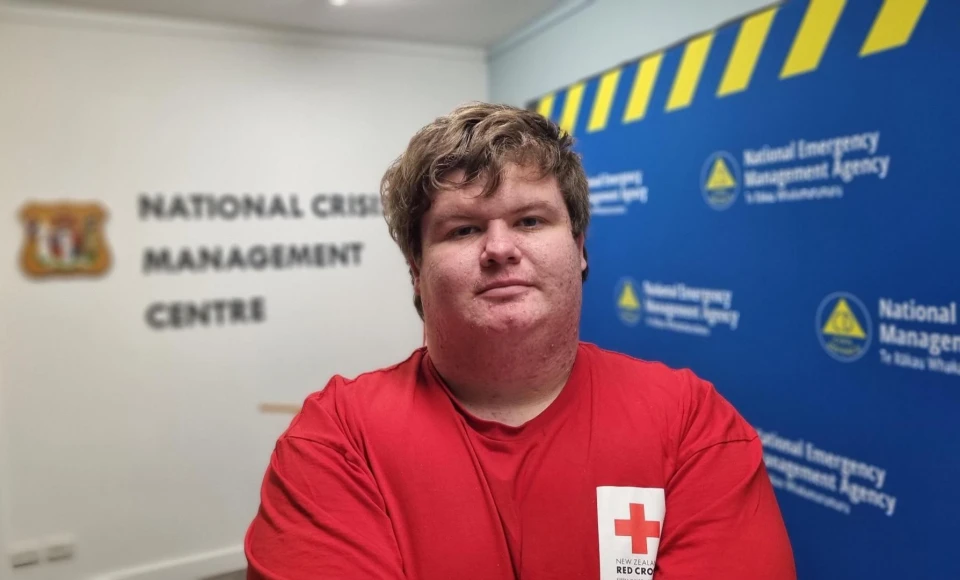
When Tobias Gregory was 16, he researched volunteer opportunities online, hoping to find a role where he could make a real difference. “Red Cross stood out to me,” says Tobias, “because it’s a recognised worldwide and there’s so many things you can do.”
A call for Disaster Welfare and Support Team (DWST) volunteers in Hawke’s Bay caught his eye. “I decided, why not? I’ll give it a shot. It was a role where I could have a big impact on the ground, supporting people experiencing emergencies first-hand, providing them comfort and somewhere nice and warm to sleep after going through such a difficult time.”
Ready to go
Tobias found a warm welcome with the local DWST, and strong support as he went through his training and on to his first deployments. “From day one, my team leader encouraged me to get all my training so I could be ready to go.”
DWST training includes Comprehensive First Aid, Psychological First Aid, and deployment readiness courses. For Tobias, the deployment course was a highlight. “I met so many other DWST members, learned how to use radios, and things like why diversity and inclusion matter in disaster responses.”
He’s now been part of two emergency responses. There’s been memorable highlights, like going out with a new StarLink technology kit during the recent Cyclone Vaianu response, ready to give people affected by the storm a way to connect with their friends and whānau. However, Tobias says it's seeing how people react when Red Cross volunteers arrive that has been most eye opening.
“The uniform and emblem are a sign of hope. Red Cross is so trusted, and people are comfortable knowing a Red Cross volunteer is just there to help. They open up about what they might need, and how they’re feeling,” he says.
Leaning into leadership
Two years later, Tobias is not only a fully trained DWST volunteer but has also stepped into leadership roles – as a DWST training officer for his local area, and as an East-West Youth Area Councillor supporting Red Cross people from Hawke’s Bay to Taranaki.
He says Red Cross’ commitment to youth involvement makes it easy to step up, and older people are keen to share their experience and transfer knowledge. “I’ve found they’re so supportive of having young people come in, learn and move up to leadership roles.” As training officer, Tobias supports his team leader Diego, leads training sessions for his fellow DWST volunteers, and makes sure that everyone is taking the right courses.
Another DWST member encouraged him to apply for the Area Council role too. “I put my hand up, and I haven’t looked back. It was a really great decision, I’ve learned so much about governance works, decision making, finance, and resolving conflict.”
Family and the future
Tobias’ parents are his biggest inspiration to volunteer. His dad has been a volunteer firefighter “for as long as I can remember”, and his mum “is passionate about giving it your all when someone needs help.” It’s a family of committed helpers, as Tobais’ younger sister Alexi has now joined the DWST too.
With high school now complete, Tobias has taken on other responsibilities. He’s trained as a volunteer rural firefighter, ready to spring into action during summer wildfires, and works night shifts as a security patrol officer. His DWST skills come in handy, as there can be tricky encounters with people, or situations like discovering a car accident when there’s no one else around. “It helps to know how to check if someone’s hurt and talk to a person who may be distressed in these situations.”
Looking ahead, Tobias is considering a career in emergency management. “I’d like to do a university degree, and people at Red Cross have encouraged me in that direction, to understand what that learning can do, what roles it can lead to, and how that study can make responses better and more effective at helping people.” At a recent DWST leaders’ meeting in Wellington, Tobias even got to visit the National Crisis Management Centre – an up-close look at how large-scale national emergencies are managed.
Sometimes peers question why he volunteers. Tobias says, “Don’t you feel so much better knowing that you have the skills to go out and help people when they need it?”
Lead image: Tobais on a visit to the National Crisis Management Centre in Wellington.
More information
Interested in joining one of our Disaster Welfare and Support Teams, and helping people prepare for and respond to emergencies? We have teams in over 20 locations around the country.
Volunteer with DWST
Keen to learn about our other volunteer opportunities? We have a range of roles including in our Red Cross Shops, with the Meals on Wheels delivery service, and supporting former refugees.
Find a volunteer role